Watercolor Line Art Leaves: A Creative Foundation
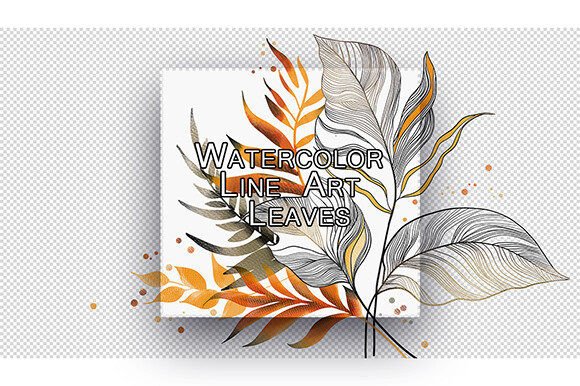
There is something undeniably soothing about the way a single leaf transitions from a crisp, ink-like outline to a soft wash of color. This specific aesthetic, known as Watercolor Line Art Leaves, sits at the intersection of precision and fluidity. It captures the organic complexity of nature while maintaining the clean structure required for modern design. When you encounter a high-resolution image like a 7000x4000px botanical design isolated on a transparent background, you are not just looking at a picture; you are accessing a versatile asset that can transform a project from amateur to professional with a single layer.
The beauty of this medium lies in its duality. The line art provides the architectural skeleton, ensuring the viewer understands the shape and vein structure of the plant. Meanwhile, the watercolor element adds depth, texture, and an emotional warmth that flat vector graphics often lack. Whether you are designing a wedding invitation or building a brand identity for a skincare company, these elements offer a unique blend of elegance and approachability.
Why Different Audiences See Value Here
Not everyone approaches digital assets with the same goals. What looks like a simple decoration to one person might be the cornerstone of a business strategy for another. Understanding how different groups evaluate these botanical designs helps clarify why they remain so popular across various industries.
- The Beginner Creator: For someone just starting their journey into graphic design or digital art, finding a perfect composition can be daunting. High-quality Watercolor Line Art Leaves serve as excellent study tools. Beginners can analyze how the lines follow the natural growth patterns of the plant or how the color bleeds into the white space. Using pre-made, high-fidelity elements allows them to focus on layout and composition without getting bogged down in the technicalities of drawing every vein by hand.
- The Professional Designer: For seasoned creatives, the priority is efficiency and resolution. They need assets that will not pixelate when scaled up for large-format printing. A file provided in PNG format with a transparent background is crucial here. It means the designer can drop the image onto any colored background—be it a deep forest green or a soft pastel pink—and have it integrate seamlessly without needing to manually remove a white box or trace edges.
- The Small Business Owner: Entrepreneurs often wear many hats, acting as their own marketers and product developers. They need branding materials that look expensive but are cost-effective. Utilizing premium quality botanical elements allows a small coffee shop owner to create packaging that feels artisanal and handcrafted, elevating their perceived value without hiring a custom illustrator for every SKU.
Evaluating Quality and Technical Specifications
When selecting resources for a project, the technical details often dictate the final outcome. You might find similar images online, but the difference between a standard web graphic and a 300 DPI high-resolution JPG (or a high-quality PNG) is the difference between a blurry mess and a crisp print-ready file.
The resolution of 7000x4000 pixels is substantial. This dimension ensures that whether you are creating a small business card or a massive wall mural, the image retains its clarity. The 300 DPI standard is the industry benchmark for high-quality printing. If your goal involves physical products like postcards, notebooks, or packaging, this level of detail is non-negotiable. Without it, the delicate lines of the watercolor art may appear jagged or muddy when printed.
The transparency of the background is another critical factor. In the world of digital design, "isolated" means the image is ready to use immediately. There is no need to spend hours using the pen tool to cut out the leaves. This saves time and reduces frustration, allowing creators to focus on the creative assembly of their design rather than the tedious cleanup process.
Practical Applications Across Industries
The versatility of Watercolor Line Art Leaves extends far beyond simple decoration. These elements act as functional components in a wide array of applications, each requiring a slightly different approach to integration.
- Social Media Branding: Content creators and marketers constantly need fresh visuals to keep their feeds engaging. These leaves work perfectly as overlays for quotes, dividers between posts, or subtle backgrounds that add texture without overwhelming text. Because the background is transparent, they can be placed over video content or gradient backgrounds with ease.
- Packaging and Product Design: For businesses selling organic goods, teas, cosmetics, or stationery, nature-inspired imagery is a powerful trust signal. Using these isolated elements allows designers to frame product labels or create repeating patterns for wrapping paper. The watercolor style suggests a handmade, eco-friendly ethos that resonates strongly with modern consumers.
- Stationery and Invitations: Weddings and formal events often rely on botanical themes. The combination of fine line work and soft color creates a romantic and sophisticated atmosphere. Whether used on the front of an invitation or as a watermark inside a thank-you note, these designs add a touch of class that feels personal and curated.
- Wall Art and Home Decor: Artists and hobbyists can utilize these high-resolution files to create prints for home decor. The large dimensions allow for cropping and arranging multiple leaves into a cohesive gallery wall. The transparent background makes it easy to composite these leaves into larger scenes or frame them individually against solid colors.
Matching Assets to Your Project Goals
Before downloading or purchasing an asset, it is helpful to ask yourself what you are trying to achieve. Are you looking for speed, or are you prioritizing long-term archival quality? If you are working on a quick social media story, a lower resolution might suffice, but for a commercial product launch, the investment in a premium, 300 DPI file is essential.
For educators and bloggers, these images can illustrate articles about botany, gardening, or environmental topics. They provide visual interest that breaks up dense text and keeps readers engaged. The organic nature of the leaves connects the reader to the subject matter on a subconscious level.
Ultimately, the decision to use Watercolor Line Art Leaves comes down to the balance between aesthetic appeal and practical utility. They offer a bridge between the rigid world of digital design and the fluid, unpredictable beauty of the natural world. By choosing high-quality, isolated elements, you ensure that your projects maintain their integrity regardless of where they are displayed or how they are printed.
Whether you are a freelancer managing tight deadlines, a publisher seeking unique layouts, or a hobbyist decorating a notebook, these design elements provide a reliable foundation. They empower you to create work that feels authentic and polished, proving that sometimes, the best designs are the ones that let nature do the talking.