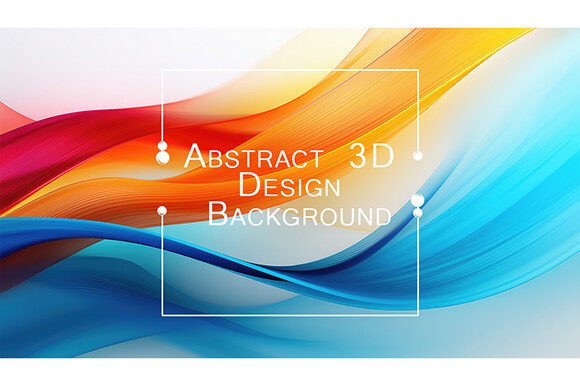
Abstract 3D Design Background
In the current digital landscape, visual assets are rarely just decorative; they are strategic tools that influence perception, drive engagement, and establish authority. An Abstract 3D Design Background serves as a sophisticated canvas that bridges the gap between creative expression and professional utility. Specifically, high-resolution imagery featuring dynamic elements like bright red, orange, and blue ribbons offers a unique opportunity to capture attention without overwhelming the core message. When utilized with intention, this type of visual asset can elevate applications, websites, blogs, and social media branding by providing a sense of depth, movement, and modernity.
The specific file in question, available at 3675x2100 pixels with a 300 DPI resolution in JPEG format, represents premium quality suitable for both digital screens and physical print media. This level of detail ensures that whether you are designing a business card or a large-scale wall art piece, the image retains its crispness and impact. However, the true value of such an asset lies not merely in its technical specifications, but in how it aligns with your broader organizational goals and communication strategies.
Strategic Alignment in Visual Communication
Effective design is about making decisions that support your objectives. An Abstract 3D Design Background is particularly powerful when used to signal innovation, energy, or forward momentum. The interplay of colors—bright red, orange, and blue—carries psychological weight. Red often conveys urgency and passion, orange suggests creativity and enthusiasm, while blue provides stability and trust. When these elements flow together in a ribbon-like 3D structure, they create a narrative of dynamic progress.
For entrepreneurs and small business owners, selecting the right background is a critical step in positioning. If your brand aims to disrupt a traditional market, a flat, static background might feel too conservative. Conversely, a complex abstract design could distract from a minimalist product line. Therefore, understanding the context is essential before applying this visual element to your materials.
- Brand Positioning: Use the vibrant ribbons to suggest a brand that is active, evolving, and customer-centric.
- Product Launches: The high contrast and depth can highlight new features or services effectively.
- Digital Presence: On websites and blogs, this background can reduce bounce rates by creating an immersive first impression.
Practical Applications Across Media
The versatility of a 300 DPI, high-resolution JPEG makes it applicable across a wide spectrum of mediums. However, each medium requires a different approach to ensure the design enhances rather than detracts from the content. Below are practical scenarios where this asset delivers measurable results.
Digital Platforms and Social Media
When adapting this Abstract 3D Design Background for websites or social media, the primary concern is readability. The complexity of the 3D ribbons means that text placement must be strategic. Consider using solid overlays or negative space to ensure your call-to-action buttons and headlines remain legible. For mobile applications, the high pixel density (3675x2100) ensures that the graphics look sharp on Retina displays, reinforcing a perception of premium quality and attention to detail.
Bloggers and publishers can use this image as a featured header or within article bodies to break up text-heavy content. The bright colors can guide the reader's eye through the page, acting as a visual anchor that keeps users engaged longer. In social media branding, consistency is key. Using variations of this background across different platforms creates a cohesive visual identity that helps audiences recognize your content instantly.
Print Media and Physical Collateral
The 300 DPI resolution is specifically optimized for print. This allows for the creation of high-quality posters, postcards, notebooks, and packaging without any loss of clarity. For packaging, the 3D effect adds a tactile dimension to the visual experience, suggesting that the product inside is equally well-crafted. Similarly, for business cards and invitations, a subtle application of the background texture can convey sophistication and professionalism.
Wall art is another area where this asset shines. Large-format prints benefit significantly from the intricate details of the 3D ribbons. When hung in an office or a home workspace, the image can serve as a focal point that stimulates creativity and conversation. However, for physical printing, always verify the color profile (CMYK vs. RGB) to ensure the bright reds and oranges appear accurately on paper.
Planning and Decision-Making Framework
Before integrating this visual asset into your workflow, it is prudent to evaluate its fit within your existing ecosystem. A common pitfall is adopting a trendy design simply because it looks impressive, without considering its functional role. To avoid this, adopt a planning framework that prioritizes outcomes over aesthetics alone.
- Define the Objective: Are you trying to sell a product, educate an audience, or build brand awareness? The background should support this goal, not compete with it.
- Analyze the Audience: Does your target demographic respond well to bold, colorful, and abstract imagery? Or do they prefer clean, minimalistic designs? Understanding your audience prevents misalignment.
- Assess the Context: Will the background clash with other brand elements like logos or typography? Ensure harmony between the 3D ribbons and your existing visual identity.
- Test Variations: Before finalizing a campaign, test the background in different layouts. Sometimes, desaturating the colors or adding a gradient overlay can improve readability while retaining the artistic intent.
Risks and Mitigation Strategies
While an Abstract 3D Design Background is a powerful tool, relying on it without clear goals can lead to confusion. One significant risk is visual clutter. If the background is too busy, it can obscure important information, leading to poor user experience and reduced conversion rates. In educational materials or instructional guides, distraction is the enemy of learning. If the viewer cannot focus on the content, the design has failed its purpose.
Another risk involves color accessibility. Bright reds and oranges can sometimes be difficult for individuals with certain types of color vision deficiencies to distinguish, especially when placed against similar tones. To mitigate this, always check contrast ratios and consider alternative color treatments for accessibility compliance.
Furthermore, overuse can dilute the impact of your branding. If every piece of content uses the same vibrant 3D background, it loses its uniqueness. Strategic variation is necessary. Use the full-color version for major announcements or hero sections, and opt for muted or grayscale versions for secondary content to maintain hierarchy and interest.
Long-Term Value and Brand Consistency
Sustainable success in branding relies on consistency and evolution. Investing in a high-quality, versatile asset like this 300 DPI JPEG allows for long-term use across various campaigns and products. It reduces the need for constant redesigns, saving time and resources while maintaining a high standard of visual output.
By treating the Abstract 3D Design Background as a foundational element of your brand architecture, you enable better decision-making in future projects. Educators can use it to make learning materials more engaging; freelancers can offer it as a premium service to clients; and marketers can leverage it to differentiate their campaigns in a crowded marketplace. The key is to approach it not as a generic template, but as a strategic component of your communication plan.
Ultimately, the goal is to achieve better results through thoughtful design. Whether you are creating a poster for a community event, designing packaging for a new product, or optimizing a website for conversions, the choice of background matters. By carefully selecting and implementing an Abstract 3D Design Background with bright red, orange, and blue ribbons, you align your visual strategy with your operational goals, ensuring that every interaction with your audience is intentional, impactful, and memorable.